Industrial Shelving
For cartons, parts and anything picked by hand rather than by forklift. Boltless, wire and longspan shelving go up quickly, cost far less per opening than pallet rack, and stack into multi-tier systems when you need to build up.
Last reviewed: Nov 2026
How Industrial Shelving works
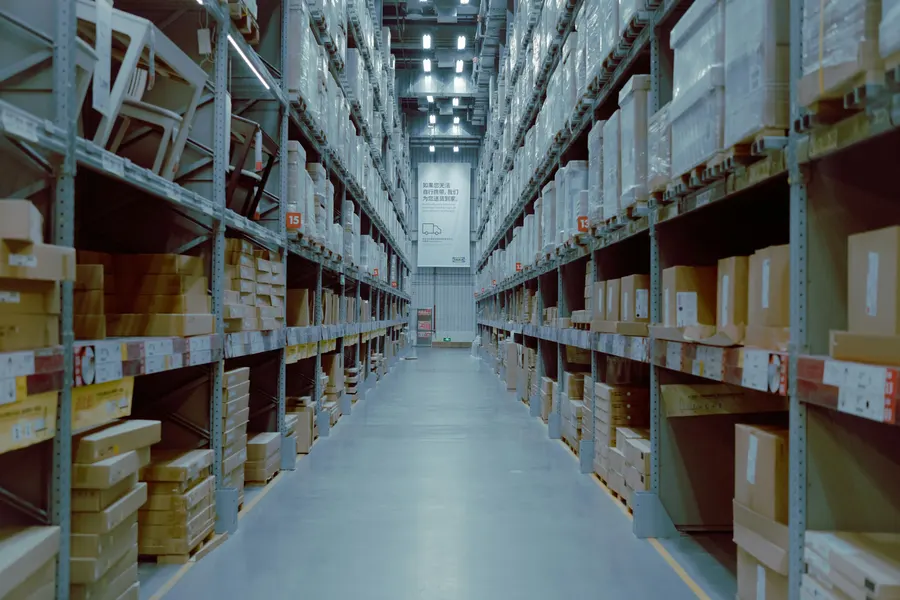
Shelving uses light-gauge uprights with shelf beams or panels. Boltless units lock together with rivets or keyholes; clip shelving uses steel panels and clips; wire shelving puts wire mats on posts with split sleeves. Longspan pairs wider beams with decking for bulky cartons.
- 01
Pick a shelf type
Boltless for general storage; wire where airflow, visibility or sanitation matter; longspan for wide, bulky items; closed steel for parts rooms.
- 02
Size the openings
Shelf depth and spacing follow your largest carton or bin. Keep the most-picked items between knee and shoulder height.
- 03
Build up with tiers
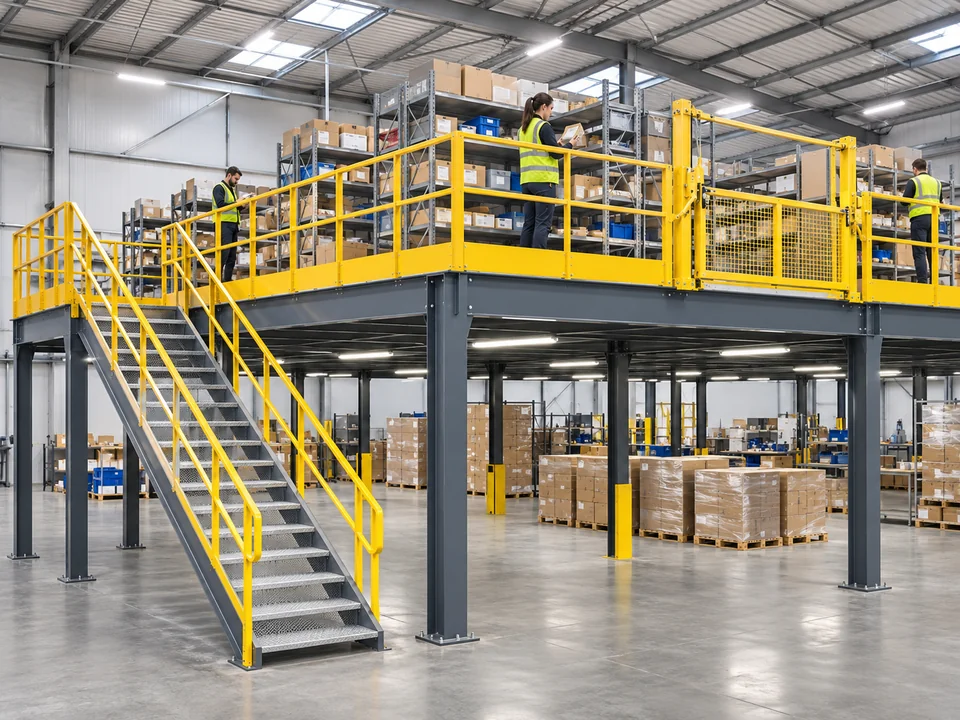
Shelving can become a two- or three-tier system with walkways when the floor runs out — at which point it is a structure that needs permits.
Strengths and trade-offs
Strengths
- Low cost per storage opening
- Fast, tool-light assembly; easy to rearrange
- Suits small parts, cartons and bins
- No forklift needed
- Wire options for food service, cold rooms and washdown areas
Trade-offs
- Much lower capacity per level than pallet rack
- Manual handling — ergonomics limit useful height
- Tall shelving still needs anchoring and may need permits
- Some imported boltless shelving carries anti-dumping duties
What to expect on a spec sheet
| Shelf capacity | Roughly 500–2,000 lb per shelf, by type and span |
|---|---|
| Unit height | Commonly 6–8 ft, up to about 12 ft |
| Shelf depth | Commonly 12–48 in |
| Shelf width | Commonly 36–96 in |
| Types | Boltless / rivet, steel clip, wire, longspan |
| Finish | Powder coat, galvanized, chrome or epoxy-coated wire |
| Add-ons | Dividers, bin fronts, back and side panels, casters |
What it costs
Shelving is sold by the unit and priced by size, capacity and finish, so per-position figures don’t translate. One cost factor worth knowing: boltless steel shelving from China has been under US anti-dumping and countervailing duty orders since 2015, continued after a 2026 review (Federal Register), and duties on several Southeast Asian sources followed in 2024 (USITC).
What drives the price
- Shelf type and rated capacity
- Unit height and number of levels
- Finish (epoxy wire, galvanized)
- Country of origin and applicable duties
- Assembly and anchoring
Published ranges are budget-level orientation from dealers and analysts, not quotes. Prices vary by region, steel market, configuration and scope.
Where it fits best
MRO & parts rooms
Spare parts by bin location.
E-commerce each-picking
Fast pick faces for small orders.
Retail backrooms
Overstock close to the sales floor.
Food service & cold rooms
Wire or epoxy-coated shelving for airflow and cleaning.
Read before you request quotes
California High-Piled Storage Permits, Explained
Warehouse Space Utilization Calculator
Suppliers for Industrial Shelving
Common questions
Shelving is built for loads handled by people — cartons, bins and parts — with lighter capacities per level. Pallet racking is built for forklifts and unit loads that often weigh a ton or more.
It depends on type and span. Boltless and longspan shelves are commonly rated somewhere around 500–2,000 lb per shelf, evenly distributed. Use the manufacturer’s rating for the exact width and depth.
Tall shelving — especially in seismic areas such as California — should be anchored or tied together per the manufacturer and local code. Some jurisdictions also count tall shelving under high-piled storage rules.
Yes, for some products. Boltless steel shelving from China has been under anti-dumping and countervailing duty orders since 2015, and duties on several Southeast Asian countries followed in 2024. Ask suppliers where the units are made.
Images are for reference only. Product and company information comes from partner suppliers; for any purchase, rely on the actual goods confirmed with the supplier.