Pallet Flow Racking
Gravity does the moving. Pallets are loaded at the high end of a gently sloped roller lane and glide to the pick face at the other end, so the oldest pallet is always the next one out. It is the standard answer for dense, first-in, first-out storage.
Last reviewed: Nov 2026
How Pallet Flow Racking works
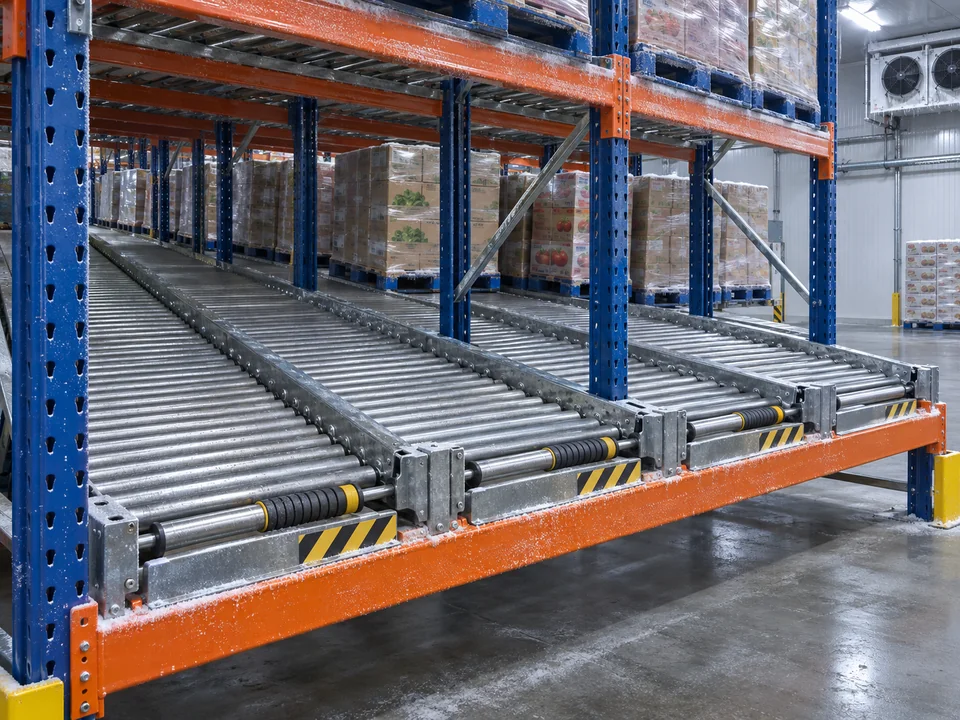
Each lane is a bed of rollers or wheels set on a slight decline. Speed controllers keep pallets moving at a safe pace, and a separator at the exit holds the lead pallet so the rest of the lane doesn’t push against the truck picking it.
- 01
Load at the high end
Replenishment trucks load from a dedicated aisle at the back of the block.
- 02
Controlled descent
Pallets roll forward under gravity; brakes spaced along the lane hold them to walking pace.
- 03
Pick at the low end
Pickers or forklifts work the front. The separator releases one pallet at a time.
Strengths and trade-offs
Strengths
- Automatic first-in, first-out rotation
- Separate load and pick aisles — replenishment doesn’t block picking
- Very dense: lanes can run many pallets deep
- Fast, predictable pick faces for high-velocity SKUs
- Cuts open aisle volume in cold storage
Trade-offs
- Highest cost per position of the static pallet systems
- Needs two aisles (load and pick) per block
- Sensitive to pallet quality, weight range and board direction
- Rollers and brakes need regular inspection; a jam stops the lane
What to expect on a spec sheet
| Lane depth | From 2 to 20+ pallets |
|---|---|
| Roller type | Full-width rollers or skate wheels; steel or polymer |
| Slope | A few percent, set per pallet weight and lane length by the manufacturer |
| Pallet weight range | Designed around a min–max; mixed weights need checking |
| Speed control | Brakes at intervals; pallet separators at the exit |
| Pallet requirements | Sound pallets, bottom boards perpendicular to the rollers |
| Design basis | Rack per ANSI MH16.1; flow components per manufacturer |
What it costs
Range published by Bastian Solutions and MH-USA. The wide spread reflects lane depth, roller type, pallet weight and freezer-rated components.
- Short lanes cost more per position than long ones
- Freezer-rated rollers and brakes add cost
- Weigh it against labor saved on rotation and replenishment
Published ranges are budget-level orientation from dealers and analysts, not quotes. Prices vary by region, steel market, configuration and scope.
Where it fits best
Food & beverage
Date-coded product that must leave in the order it arrived.
Pharmaceuticals
Lot control and expiry dates.
Cold & frozen storage
Dense FIFO without trucks entering the rack.
High-velocity pick faces
Fast movers replenished from behind.
Read before you request quotes
Drive-In vs. Push-Back Racking: Which Fits Your Warehouse?
How to Calculate Pallet Rack Load Capacity
Annual Rack Inspection Checklist
California High-Piled Storage Permits, Explained
ANSI MH16.1-2023: What Rack Buyers Need to Know
Suppliers for Pallet Flow Racking
Common questions
Pallets are loaded at the high end of an inclined roller lane and move by gravity to the low end, where they are picked. Brakes control the speed, and a separator at the front holds the lead pallet so the others queue behind it.
Pallet flow gives FIFO and separate load and pick aisles; push-back is LIFO from a single aisle and usually cheaper per position. If date control matters, flow is usually the better fit.
Flow lanes are designed around a specific pallet type, size and weight range. Sound pallets with bottom boards running perpendicular to the rollers work best. Give suppliers your heaviest and lightest pallet so they can set the slope and brakes.
Yes, and it is common there because it cuts aisle space you would otherwise have to cool. Ask for components rated for the temperature — lubricants and brakes behave differently in the cold.
Check rollers, brakes, separators and entry guides regularly, and clear debris such as broken boards and stretch-wrap tails. A pallet stuck halfway down a lane is the problem to prevent.
Images are for reference only. Product and company information comes from partner suppliers; for any purchase, rely on the actual goods confirmed with the supplier.