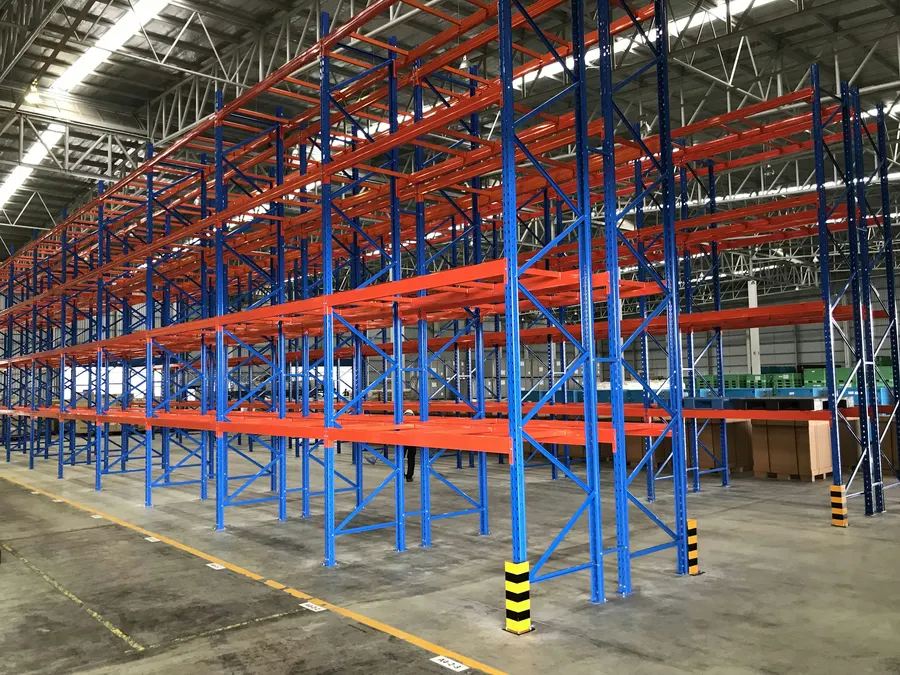
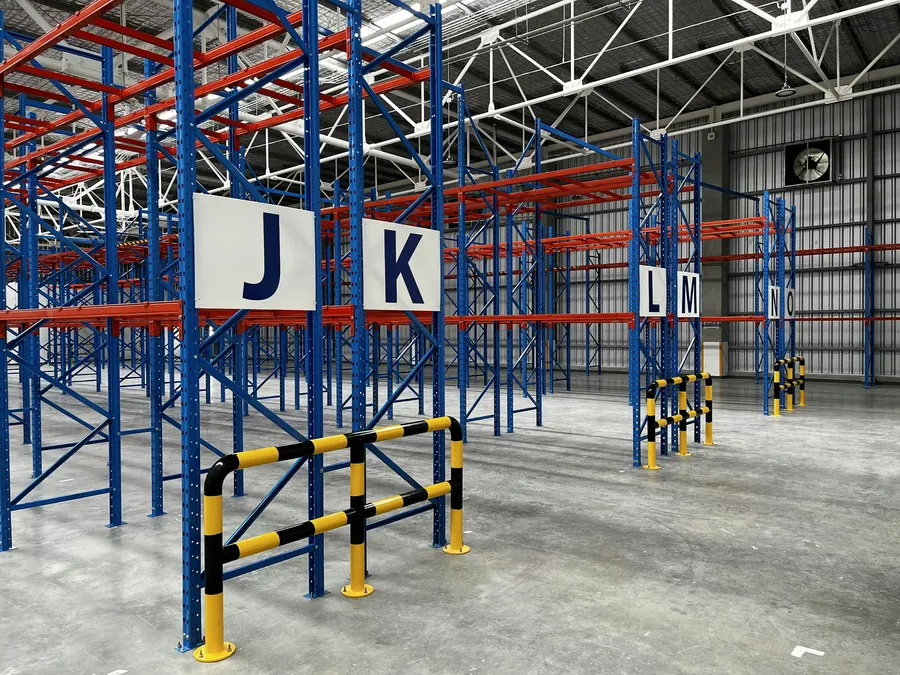
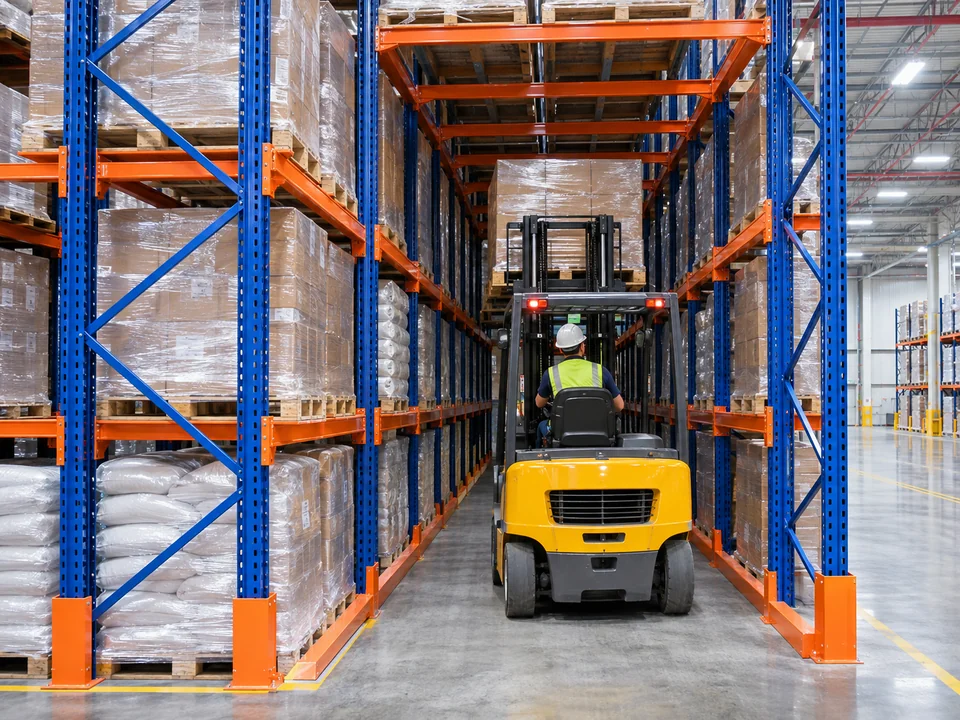
Used & Refurbished Racking
Second-hand pallet rack can cost about half as much as new and is often available right away — a real advantage while steel prices and tariffs push new quotes up. The trade-off: you need to know exactly what you’re buying, and whether it will pass your local code review.
Last reviewed: Nov 2026
How Used & Refurbished Racking works
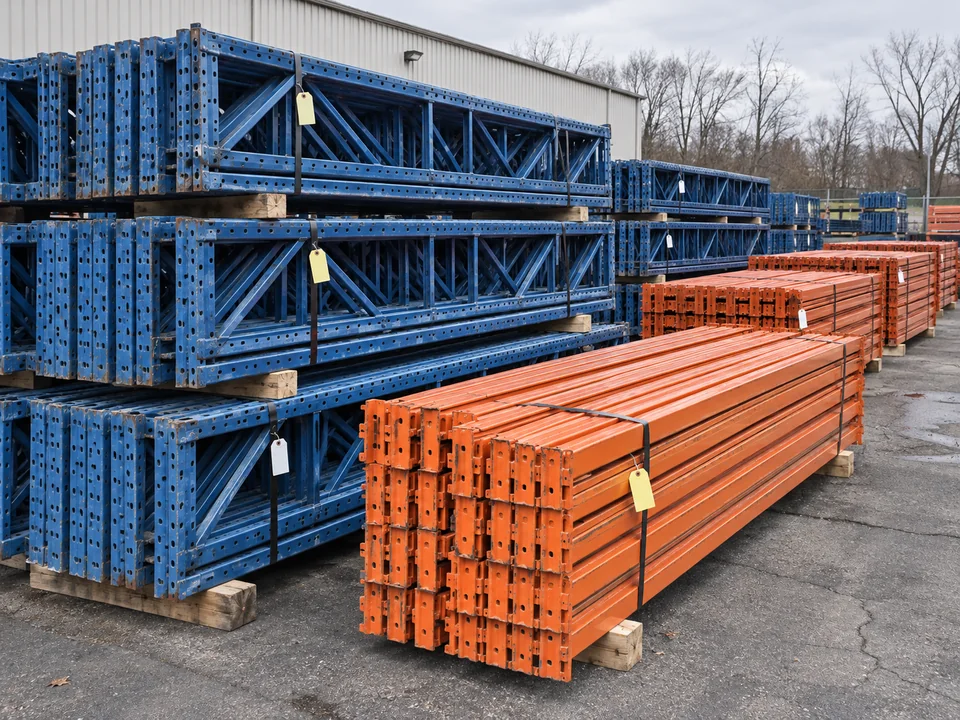
Dealers buy rack from warehouses that close or relocate, sort it by manufacturer and size, inspect it and resell it — as-is, cleaned or refurbished. Many also install, often completing a layout with new beams or frames.
- 01
Identify the system
Manufacturer, slot pattern, frame and beam sizes. Capacity charts only apply to known, matching components.
- 02
Inspect every piece
Reject bent or twisted members, cracked welds, damaged base plates and heavy corrosion. Ask what the dealer’s inspection covers.
- 03
Engineer and permit
If the project needs a permit, the engineer needs capacities for the actual parts — and older rack may not meet current seismic design.
Strengths and trade-offs
Strengths
- Lower cost per position than new
- Short lead times when your size is in stock
- Easy way to match and extend an existing system
- Keeps steel in service instead of scrap
Trade-offs
- Damage can be hidden; quality varies by source
- Capacity data may be missing for discontinued brands
- Older rack may not pass current seismic or permit review
- Freight, hardware and installation are usually extra
What to expect on a spec sheet
| Types available | Roll-formed (teardrop) and structural; also drive-in and cantilever |
|---|---|
| Frame heights | Whatever is in stock; 10–20 ft frames are common |
| Condition grades | As-is, cleaned and inspected, or refurbished (dealer-defined) |
| Documentation | Manufacturer ID, capacity charts, inspection report — ask for all three |
| Hardware | Safety clips, anchors and row spacers are often bought new |
| Design basis | Same rules as new rack: ANSI MH16.1 and local building and fire code |
What it costs
Used roll-formed selective rack runs about $20–25 per position and structural about $30–35; used drive-in starts around $55 (American Surplus). New selective is roughly $40–75 per position (Bastian Solutions).
- Used quotes often exclude freight, hardware and installation (Conesco, SRSI)
- Hot-rolled steel is up sharply year on year, widening the gap with new (GMK Center)
- Budget for engineering if a permit is required
Published ranges are budget-level orientation from dealers and analysts, not quotes. Prices vary by region, steel market, configuration and scope.
Where it fits best
Expanding a system
Matching the rack you already have.
Short-notice projects
When new-rack lead times don’t work.
Tight budgets
Start-ups and short leases.
Temporary storage
Seasonal or project overflow.
Read before you request quotes
How to Calculate Pallet Rack Load Capacity
Annual Rack Inspection Checklist
California High-Piled Storage Permits, Explained
RMI vs. FEM vs. AS 4084: How Rack Standards Differ
Warehouse Construction Is Picking Up. Here's What It Means for Racking Demand
Steel Rack Tariffs: What Buyers Should Know Before Ordering
Suppliers for Used & Refurbished Racking
Common questions
As a rough guide, about $20–25 per pallet position for roll-formed selective rack and $30–35 for structural, according to American Surplus. Freight, hardware and installation are usually extra, and prices move with steel.
It can be, if it is identified, undamaged and loaded within the manufacturer’s capacities. Inspect every upright and beam, replace damaged parts, and keep clips and anchors complete. Our inspection checklist shows what to look for.
Only with matching, compatible components. Similar-looking slot patterns from different manufacturers may not lock correctly. When in doubt, have the manufacturer or an engineer confirm.
Not always. Reviewers expect engineering for the actual components, and some older rack was designed to earlier seismic requirements. Check with your engineer before you buy — see California high-piled storage permits.
Used makes sense for matching an existing system, short lead times or tight budgets. New makes sense when you need documented capacities, seismic design for a permit or a specific configuration. Plenty of projects mix both.
Images are for reference only. Product and company information comes from partner suppliers; for any purchase, rely on the actual goods confirmed with the supplier.