Rack inspection & damage assessment
Most rack damage comes from forklifts, and the dangerous kind is the damage nobody reported. Get an expert inspection by a qualified person — annually, after an impact or an earthquake — with a written report that says what to fix first.
- At least annually
- After impacts & earthquakes
- Direct supplier contact
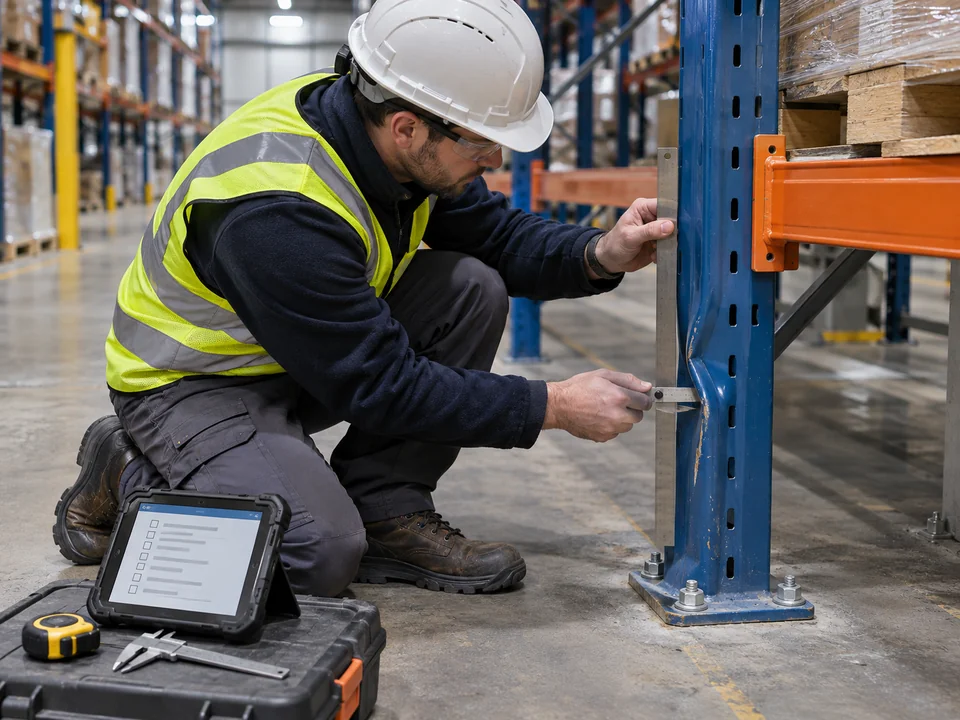
- Every bay checked, by location
- Damage rated by severity
- Repair or replace advice
- Load plaque and capacity notes
- A date for the next inspection
What an inspection covers
The Rack Manufacturers Institute (RMI) recommends regularly scheduled inspections by a qualified person, at least annually. A good inspection service covers all of this:
Annual expert inspection
RMI calls for a qualified person “familiar with storage rack design and installation requirements”, at least annually — more often where traffic, product velocity or past damage is high.
After impacts & earthquakes
A lift truck collision or a seismic event calls for an immediate review, not a wait until the annual visit.
Damage assessment
Uprights, base plates and anchors, bracing, beams and connectors, beam locks and the loads themselves — plus plumb, with 1/240 of height as the MH16.1 limit.
Written report with ratings
Each finding with its location, photo, severity rating, recommended action and deadline. RMI recommends documenting the schedule and results and keeping them.
Repair or replace advice
RMI recommends replacement over repair when the manufacturer and model can be identified; engineered repair kits are an option when designed for the situation. No field welding or straightening without engineering approval.
Load plaques & engineering
Plaques present, legible and matching the current beam levels; capacity reviews after reconfiguration; LARC drawings and permit support where needed.
How an inspection works
-
01
You + inspector
Book & scope
Number of aisles and bays, rack types, drawings, previous reports and any recent impacts or earthquakes.
-
02
Inspector
Site walk
Every bay checked at the floor and at height: uprights, anchors, bracing, beams, locks, plaques and flue spaces.
-
03
Inspector → you
Flag the worst first
Serious damage is reported on the day so you can unload and isolate the affected bays immediately.
-
04
Inspector
Report
Rated findings with photos and locations, recommended repairs or replacements and capacity notes.
-
05
Supplier + engineer
Repair & sign-off
Replacement parts or engineered repairs; under MH16.1-2023 a registered design professional certifies the repair before reuse.
-
06
You
Schedule the next one
Set the next expert inspection and keep daily operator checks and monthly internal inspections running in between.
Between expert visits, use our free printable rack inspection checklist for monthly internal inspections.
Red, amber, green: what the ratings mean
Many inspection reports sort findings into three levels so you know what to fix first. The traffic-light scheme comes from UK guidance — HSE’s HSG76 and SEMA codes. It is not written into ANSI MH16.1 or OSHA rules, so ask your inspector how their ratings map to actions and deadlines.
RedVery serious damage
Offload and isolate the affected area immediately. Do not reuse it until it is repaired or replaced and signed off.
AmberDamage that needs action
Do not reload the location until it is repaired. Under HSG76, amber damage not repaired within four weeks is treated as red.
GreenWithin limits
Record it and recheck at the next inspection.
| Location | Finding | Rating | Action |
|---|---|---|---|
| Aisle 4 · Bay 12 · Front upright | Dent in column face about 18 in above floor | Amber | Replace upright; do not reload level 1 until repaired |
| Aisle 4 · Bay 13 · Base plate | Two anchors missing | Red | Unload and isolate bays 12–13; re-anchor to spec |
| Aisle 7 · Bay 3 · Load plaque | Plaque does not match current beam levels | Amber | Confirm capacity with manufacturer; replace plaque |
| Aisle 9 · Bay 1 · Column guard | Scuffed, still secure | Green | Monitor at next inspection |
Who inspects, and how often
- Operator checkDaily or each shiftTrained forklift operators and pickers
- Internal inspectionMonthly (more in busy zones)Supervisor or safety lead with a checklist
- Expert inspectionAt least annually + after impactsQualified person: rack engineer, PE or inspection firm
Common practice, in line with RMI guidance; set intervals by traffic and damage history. Details in the rack inspection checklist.
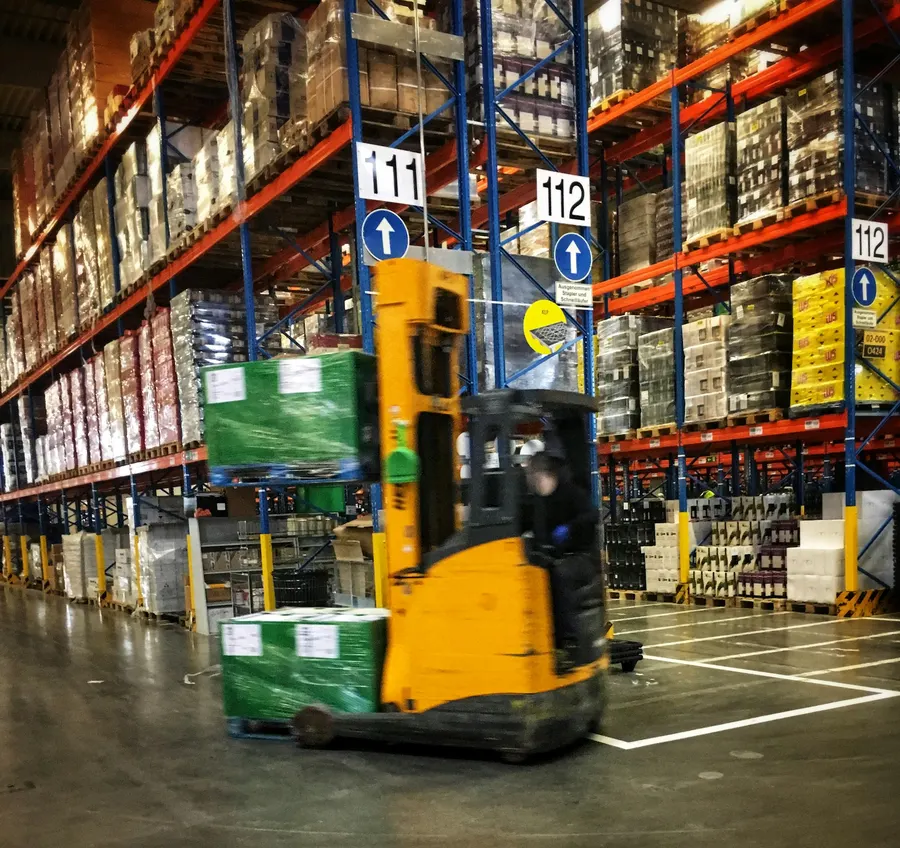 Reference image
A qualified person — and an engineer for repairs
OSHA has no rack-specific standard or inspection interval, but it can cite rack hazards under the General Duty Clause, with ANSI MH16.1 and manufacturer instructions used to show the hazard was recognized. That makes the inspector’s qualifications matter:
Rack design knowledge
RMI describes a qualified person familiar with storage rack design and installation requirements — often a rack engineer, a professional engineer with rack experience, or an inspection firm.
Repairs certified
Under ANSI MH16.1-2023, a damaged portion goes back into service only after a registered design professional certifies it is restored to at least its original design capacity.
Documented findings
Ask for a sample report before you book: locations, photos, ratings, actions and deadlines.
Independent of the sale
If the inspector also sells replacement parts, ask for photos and measurements behind every replace recommendation.
You may see SEMA Approved Racking Inspectors (SARI) in UK sources. SARI is a UK industry scheme, not a US requirement. How UK, EU and US practice differ.
After an earthquake, and in California
A seismic event calls for an immediate rack review. In California, inspections also touch the fire and building permits your racks were approved under.
After a quake
Check anchors, base plates, bracing and plumb before reloading — damage can be hidden behind loads.
Flue spaces
Keep the transverse and longitudinal flues your fire permit relies on; the CFC sets 3 in or 6 in depending on the rack.
Sprinkler clearance
LA County’s 2026 list asks for at least 18 in between the top of storage and the ceiling sprinkler deflectors.
Changes
A new commodity, storage height or layout can require a new review — the approved plans must stay on the premises.
Examples from LA County, Fresno and other California handouts summarized in our guide. Requirements vary by jurisdiction and code edition.
Questions buyers ask
The Rack Manufacturers Institute (RMI) recommends regularly scheduled inspections by a qualified person, at least annually, with more frequent checks where traffic, product velocity or past damage is high — and an immediate check after any forklift impact or seismic event. Many operations add daily visual checks and monthly internal inspections.
OSHA has no rack-specific standard and does not set a rack inspection interval. It can cite rack hazards under the General Duty Clause and its materials-storage rule (29 CFR 1910.176(b)), and industry standards such as ANSI MH16.1 and manufacturer instructions are used to show what a recognized hazard is.
RMI describes a qualified person familiar with storage rack design and installation requirements. In practice that is often a rack engineer, a registered professional engineer with rack experience, or an inspection firm. Under ANSI MH16.1-2023, a damaged rack goes back into service only after a registered design professional certifies it has been restored.
The traffic-light scheme comes from UK guidance (HSE HSG76 and SEMA). Red is very serious damage — offload and isolate immediately. Amber needs action — do not reload until repaired; under HSG76 it becomes red if not repaired within four weeks. Green is within limits — record and monitor. US standards do not mandate the scheme, so ask how your inspector defines each level.
Sometimes. RMI recommends replacement over repair when the rack’s manufacturer and model can be identified; engineered repair kits are an option when they are designed for the situation. Do not straighten, heat or weld a damaged component on site without engineering approval.
RackingZone arranges suitable pre-screened inspectors and suppliers to contact you directly. You agree scope and price with them; RackingZone is not a party to the contract.
Sources
- Modern Materials Handling — Don’t Underestimate Rack Maintenance & Repair — RMI inspection guidance
- Damotech — ANSI MH16.1 excerpts — owner duties in Section 4
- J. J. Keller — Storage rack safety: capacity, anchoring and stacking (OSHA General Duty Clause)
- OSHA — 29 CFR 1910.176 — Handling materials, general
- HSE — HSG76 Warehousing and storage: a guide to health and safety
- Cisco-Eagle — Damaged pallet rack: repair or replace?
Last reviewed: Nov 2026 · General information only — follow your rack manufacturer, your engineer and local requirements.
Request an inspection
Tell us about the job. RackingZone arranges suitable pre-screened suppliers to contact you directly.
Request received
We will review it and arrange for suitable pre-screened suppliers to contact you directly — typically within 1–2 business days.